Sockeye Salmon

Why would a restaurant that prides itself in being part of the community, with a menu where almost every dish is based local sustainable ingredients be using wild Alaskan  Sockeye Salmon?

Well, there are several reasons, first and foremost it is extremely sustainable.  The fisheries are currently very well managed, once the quotas are met the fishing stops, leaving plenty of salmon to swim up the rivers and estuaries to spawn and become bear food.

Bear-eating-Sockeye-1024x683

Secondly is traceability, we are able to verify where and how the fish was caught down to the boat.  Unless you know the fisherman, or are purchasing from a quality fishmonger, you are not able to do that with most east-coast fish.

We purchase our sockeye through Sea to Table a company based in Brooklyn, NY that distributes only wild, domestic, sustainable and traceable seafood.  They’re getting the sockeye from Naknek Family Fisheries a small family-owned business in Bristol Bay, Alaska.  As soon as the fish is caught it’s sorted, keeping the highest quality fish for their fillets.  The fillets are then flash frozen, vacuum sealed and stored until they shipped.  With the salmon run (season) being short and the number of fish caught so large, freezing the fillets for year round delivery is necessary.  Much of the salmon is also smoked and / or canned.

I never thought I would be happy to use frozen fish, I have to admit I was skeptical up until the moment I cooked and tasted it.  The skin crisps beautifully, the flesh is firm and moist.  This fish is a very high quality product; I don’t think it has diminished at all from its fresh state.  I highly recommend everyone eating Bristol Bay Sockeye Salmon.

You may see Atlantic Salmon in stores or on menus, don’t buy it.  It is all farm raised in overcrowded pens, eating more fishmeal than the flesh it is producing and polluting the bays all the while.  There have been great strides made in recent years to make a better-for-the-environment and better tasting farmed salmon though it still pales in comparison to any wild salmon.

Another great thing about sockeye salmon is people love it, it tastes great, with the added bonus that it is also very good for you, high in omega-3 acids, vitamins A, C, D, and E, niacin and Vitamin B-12.  All that and it’s a cinch to cook, very adaptable to many cuisines.

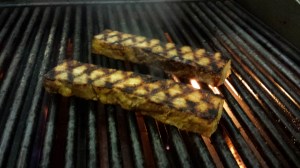
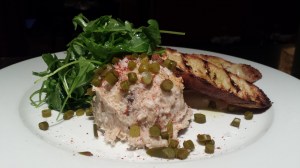
Here some of photos show a few of the ways we have been preparing it.

20150330_130713 (2)

Korean Barbecue Glazed

20151109_121205

In a Banh Mi

20170214_175545

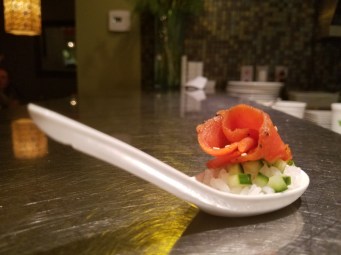
tea-cured hors d’oeuvres

20151109_202235

with pig’s skin risotto and apples

20151207_182520

hot-smoked dip with chips

20151210_121102

soy glazed with kimchi and mushroom mayonnaise

20170202_182651 (1)

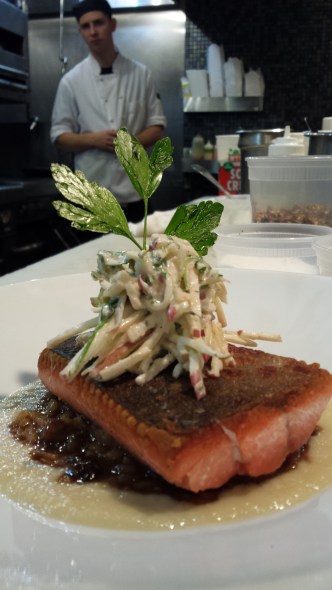
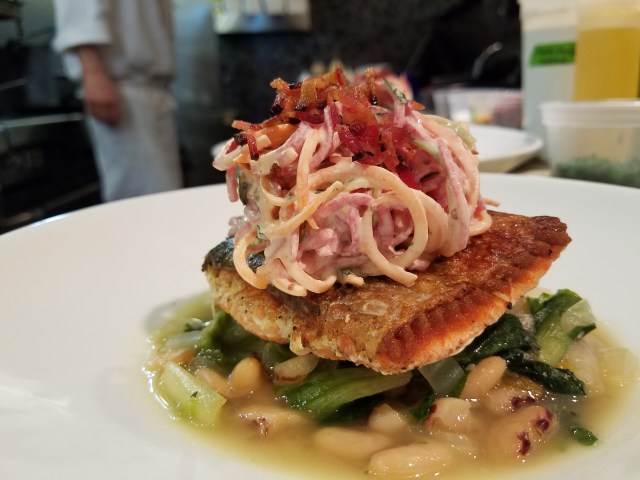
with soldier beans, escarole and bacon


Eat well. Eat wild Alaskan Sockeye Salmon from Bristol Bay.

EVOO’s Chicken

I’m not done with Hoosier the pig yet, we are still in the process of utilizing every bit of him. Our freezer still holds his smoked head and feet, chunks of meat and a bit of skin.  I will follow-up with blog posts as we prepare it.

In the meantime I’ve decided to tell about the chicken we are proudly serving.feather brook logo

We are always looking for better, more local sources for the food we serve.  Feather Brook Farm is one of those great sources that came upon us.  Farmer Tad, dropped by some samples one day and we were instantly hooked.  The chickens are wonderful, full-breasted, flavor bombs, grown naturally with no growth hormones or antibiotics thirty miles outside of Boston in the town of Raynham, MA.  We had been using chicken from Misty Knoll Farms in middle Vermont.  A fairly large regional poultry farm that produces a very good product, not as consistent in size and with a greater carbon footprint, being near two hundred miles from Boston not thirty.

Farmer Tad does it all, he is not only the sales representative, he raises and processes the birds.  He affably delivers the birds to us wearing his over-all shorts, a straw hat and a big grin.

Tad in a Hat

Tad

The only challenge with Tad’s birds is / was finding ways to utilize every bit of the chicken.  We use the breasts on our dinner menu, usually sous videing it and serving it with other seasonal ingredients.

20160406_200026

Sous Vide Chicken Breast

The thighs are used many different ways; they are sometimes ground into sausage for our lunch signature chicken sausage sandwich, braised and used with pasta as a filling, in a sauce or stuffed into a potato on our lunch menu.

We also brine and smoke the thighs and drums and use them as a topping on one of our specialty pizzas at our sister restaurant Za.

20161213_134139

Za’s smoked chicken pizza

We often have wings on the menu in a variety of different preparations.  On occasion make buttermilk brined fried chicken thigh sandwich.  The bones are used for stock, the livers for chicken liver mousse or in country pate.

20151208_180452

Chicken Liver Mousse

Having farmers like Tad growing real food makes our job of operating a sustainable restaurant that is truly part of its community feasible.

Return of a Signature Dish

One of the few dishes from our original opening menu, in 1998, has stood the test of time, has returned again.  For how long? Who knows.  We had it on our menu for 12 straight years before I decided I was sick of cooking it and that we could use the menu space for different dishes changing them frequently.

I came up with this dish in response to the somewhat bullshit statement that seafood and dairy should never be paired together.  I can most certainly agree that you need to be careful with what you pair together, a potent cheese has no place with most seafood. However, who could ever say that smoked salmon and cream cheese aren’t wonderful together.  Shrimp and Parmesan or feta, a good tuna melt with mild cheddar, anchovies with Parmesan to name a few other obvious pairings.

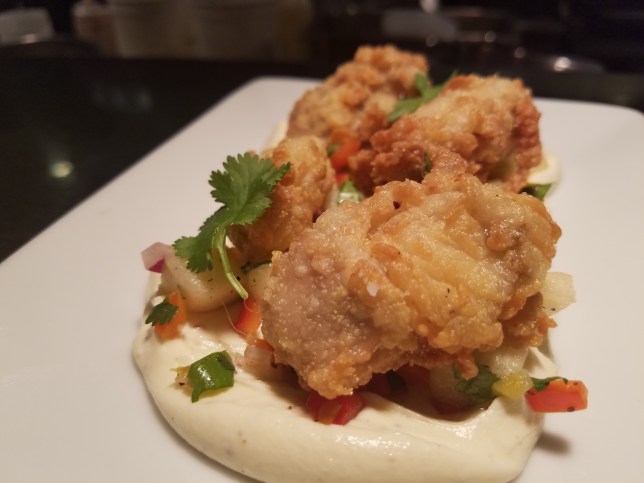
So here it is Cornmeal Crusted Fried Oysters with Goat Cheese Fondue and Apple – Bacon Salsa.

20170214_183402

Valentine, oh Valentine

Just finished another EVOO Valentine’s Day dinner service, our 19th time.  The staff cooked and served some great food.  Thanks to all, YOUR AWESOME!  The only bummer was that our on-line reservation system decided that we were fully booked long before we were even close.  Fortunately Colleen, my Valentine, realized it yesterday, 2/13, so we were able to re-coop some of our reservations.

Here are some photos of our “Here’s the Love Menu”

20170214_185117

“Here’s the Love”

20170214_175537

We started everyone off with – Lapsang Souchang Tea Cured Wild Alaskan Sockeye Salmon

Some of our Starters – Foie Gras Custard, Fried Oysters, Carrot Ravioli, Coconut – Sweet Potato Soup and Burratina

Some of the Mains – Beef Rib Eye, Duck and Blue Cod

Chocolate Cake, Walnut Tart and Passion Fruit Pudding Cake

New Menu items

We added a couple of new items to our menu tonight, both will be available for lunch and dinner.

Pasta dish changed to-

Billy’s Spaghetti with Braised Rabbit, Countneck Clams, Chervil, Tarragon, Fennel Cream and Zesty Crunch

20170202_185100

Billy our saute cook made the spaghetti, the rabbit is from Feather Brook Farms in Raynham, MA.  The countneck clams are from Island Creek Oysters in Duxbury, MA


New fish dish-

Seared Wild Alaskan King Salmon Fillet with Soldier Beans, Escarole, Turnips, Carrot – Radish Salad and NH Smokehouse Bacon

20170202_182651

The salmon is caught by the Nicholson family in Bristol Bay, Alaska.  Soldier Beans are from Osbourne Family Farm in Charleston, ME.  The carrots are from Drumlin Farm in Lincoln, MA and the turnips and radishes hail from Verrill Farm in Concord, MA.  The bacon is from North Country Smokehouse in Claremont, NH.

Death of a pig (part 7.5)

Back to the ham, I had a Panini today made with Hoosier’s ham.  It was fantastic, Mark (our day sous chef) did the sweet and smoky ham up with Robinson Farm’s (Hardwick, MA) Family Swiss and dill pickled onions served on Raul’s (our baker) sandwich bread. I enjoyed with some of our homemade fries and Alex’s (our long-time lunch cook) tangy ketchup.

My lunch, fries were added after I took the photo.

20170201_225928

Death of a pig (part 8) Saucisson Sec

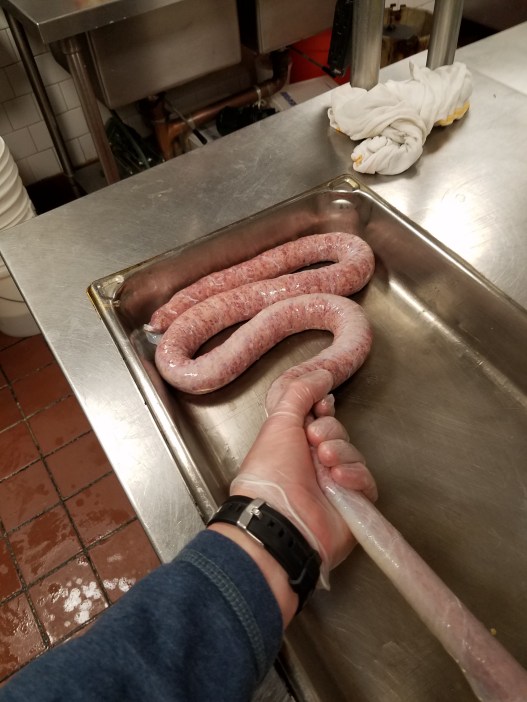
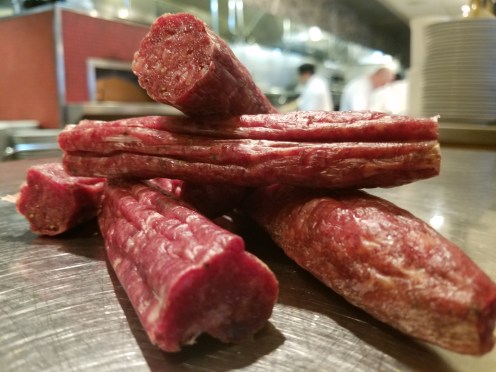
Making dry cured sausage is simple; grind some meat mix it with spices, stuff it into casings and hang it to dry in a fairly humid, cool space, then wait. To quote Tom Petty “the waiting is the hardest part”.  Three-ish weeks later, if all goes well you have a beautiful semi-dried full flavored, rich, fatty, dry, slightly tangy, cured sausage.  I have made this recipe many times with varied results, mostly great.  However, once in a while I have gotten a batch that just doesn’t work.  Don’t worry when it’s not right it’s obvious, it does not have the rosy meat color you expect from air-dried cured meat, it looks kinda gross and smells rotten.

Below is a pictorial of the steps we used to turn Hoosier’s fat and flesh into Saucisson Sec (dry-cured sausage).

Ground pork mixed with spices.

20170105_203617

The trusty hand cranked sausage stuffer, many hundreds of pounds of sausage have been made using this beast over the 15 plus years we have had it.

20170105_204233

I’m pushing out the sausage into casings.

20170105_204743

Sizing them up.

20170105_205131

Hanging them to dry in our curing room, next to some duck prosciutto that is just about done.

20170125_221246

Three weeks hanging and they’re done.

20170125_153454


Though we still have quite a bit of Hoosier left to use; most notably the head and a bunch of meat to braise, it may be a while before we get into it.  I will continue to write about as we utilize it.


Cuba with Dad

20170126_132720.jpg

My parents were visiting us over the Thanksgiving long weekend and my father Walter mentioned that Americans are now able to travel to Cuba and that he wanted to go.  He noted that my mother Carolyn had no interest in going.  I immediately chimed in that I would be happy to go with him.  My dad had visited Cuba before the embargo, while attending the University of Miami in the mid 1950’s.  He has always talked fondly about the country and has often expressed a desire to return.

Within a few days I reiterated my willingness to go with him, that was all the motivation he needed.  He jumped on it, in no time flights and an Airbnb where booked.

Wally, as his friends, and sometimes I refer to my dad, is conversational in Spanish.  I on the other hand understand quite a bit and speak very little, which is a shame.  I work in restaurants where at least half of the employees first language is Spanish.  I also have a brother who has lived in Spain since the early 90s whom I have visited upwards of twenty times.  I should really have a much better grasp on the language than I do, hopefully I will suck-it-up and learn more.

I met my dad at his house in Florida so we could depart very early the next morning for our flight on JetBlue from Fort Lauderdale to Havana.  The flight was very sort, 45 minutes total flying time.  The first thing I noticed in Havana was how nice and accommodating the Cuban people were, very outgoing yet relaxed.  We arrived several hours early to the Airbnb and were greeted warmly, told not worry, it was not an issue.

20170110_071823

I have always heard about the old American cars in Cuba and figured that they would be a few here and there for the tourists.  I was wrong about that, I would estimate 70% of all cars were American models from the late forties and fifties.  No car, old American or new Russian, had anything that we would consider pollution control.  Straight exhaust streamed out of tailpipes or up through floorboards, as we experienced in one taxi.  It was really nasty, walking around the city you could taste it!  For many reasons this needs to be fixed.

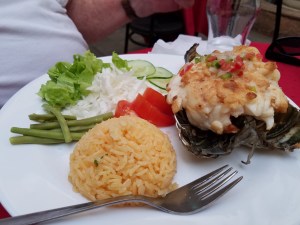
I had read in several publications not to expect much when it came to food.  Most of the restaurants are government owned and there was not much emphasis on creativity or quality.  This proved to be very true, the food we experienced was blah!   We went to a couple of restaurants recommended to us by locals and they just kinda sucked, no love for the food at all.  Considering the quality of the food it was also expensive, $20 -$25 for a piece of grilled fish or some braised beef is fine, but it should be at least adequate.  At each of the restaurants we visited we ordered the main item – fish or meat and it was served with rice, beans and vegetables, nothing interesting.  I have read that some privately owned restaurants, Paladares,  located in private homes are supposed to be better than the government run restaurants.  The problem is they don’t have websites, not that with the very limited wifi you would be able to Google a Paladare.  Next time I visit I plan do more research ahead of time to find some better dining options.

A few of the restaurants we dined at.

20170110_145411

20170111_130045                  20170111_125842                                   20170112_134802

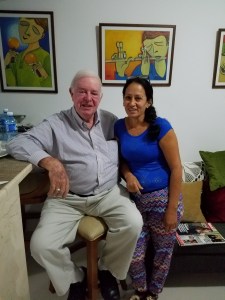
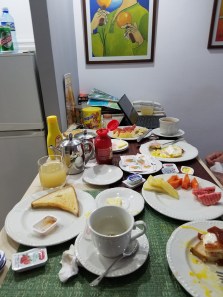
Our best meal each day was breakfast, prepared in our flat by Juanita, our maid.  She would arrive before we woke, have coffee ready at the predetermined time, then she would proceed to make us breakfast which included fried eggs, ham, cheese, a selection of fruit, toast, butter, jam and juice.  Then she would clean up after breakfast as well as the rest of the flat. The breakfast cost the equivalent of 5 U.S dollars, a real bargain, and Wally was able to practice his Spanish with her.

Wally with Juanita, the remnants of Juanita’s breakfast.

20170113_071550             20170112_080816-1

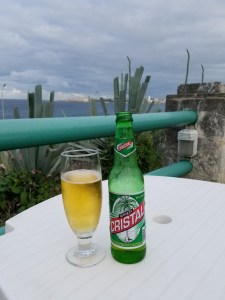
If you like light crisp Caribbean style beer the indigenous Cristal is adequate, I drank several.  I was able to find an ocean-side table with a nice view at the Hotel Nacional de Cuba each evening.  The locals have an affinity to Heinekin, personally I would rather not drink than let that insipid liquid touch my lips.

mediocre beer with a great view

20170110_170236

I had a great trip with my dad, we have not had a lot of opportunities to spend undisturbed time together like this. It was a wonderful trip and I will cherish the time spent with my dad.

Havana is a beautiful city steeped in culture, here are some scenes from around the city.

20170112_091552

A fisherman avoiding the sea spray on the Malecon

20170111_153238

Che Guevara immortalized in the Plaza de la Revolution

20170112_093239

Commonplace food service out of the windows of private homes

20161019_115241

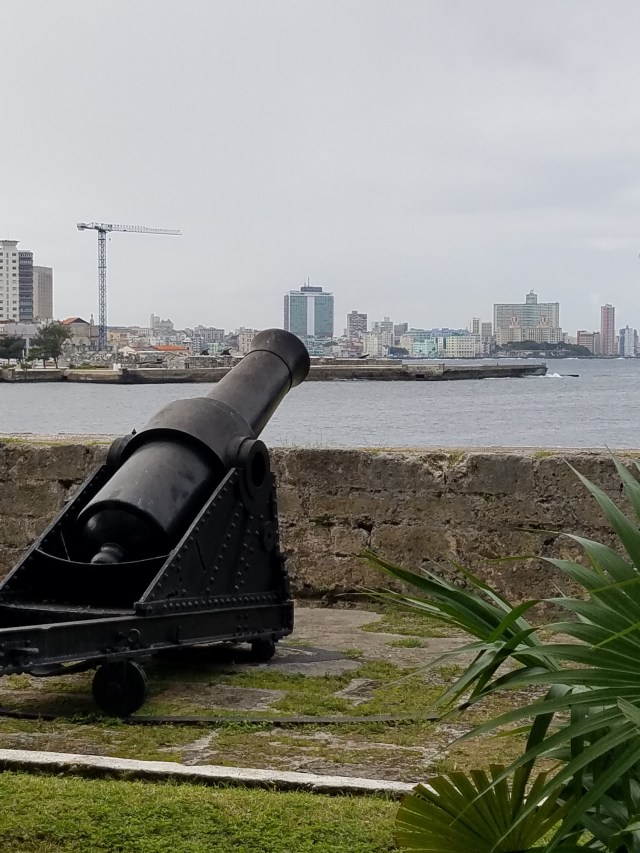
Morro Castle guarding Havana Harbor

20161019_145710

Gypsy lady smoking a Cuban Cigar

A couple of markets, note that there was no refrigeration for the meat.
City streets
20170112_120644

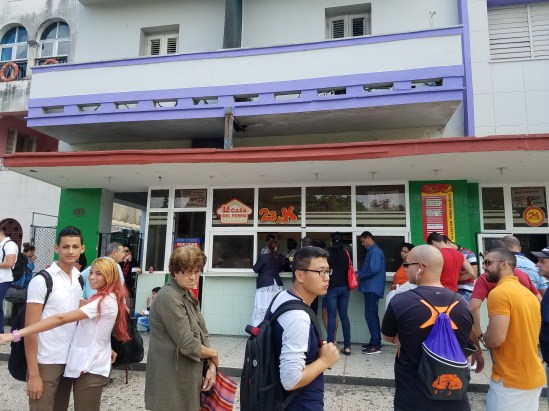
A long queue at La Casa Del Perro Caliente (The Hot Dog House)


20170112_122256

Scooter taxis

20170110_115146-1

Hotel de National Cuba


20170126_132417

Walking by a school, these kids knew an obvious tourist when they saw one and asked me to take their photo.

20170111_131505

Looking from Morro Castle towards downtown Havana

Along the Malecon

All photos credited to me Peter McCarthy

Death of a pig (part 7) Ham

After two plus weeks in brine and 14 hours in the smoker Hoosier’s American Style Smoked Hams are done and they are beautiful; sweet, smoky, moist and tender.  We have been making this style of hams for many years, tweaking the recipe and methods to ensure a great ham every time.

Hoosier’s hams – each ham is cut into three pieces, brined, tied, smoked, chilled and sliced.

Smoking our own hams bring us much more than ham (the meat).  The meat could end up in ham sandwiches, part of a pasta dish, paired with cheese for a first course or even as a ham steak.  The skin makes a smoky gelatinous stock we often use in pigs skin risotto, soups and stews.  Scraps and bits are often used as a flavoring ingredient, such as in our Bangkok Chicken Wings where we pair the sweet ‘n’ smoky ham with Thai fish sauce, lime juice and spicy chilies.  We also always place a pan directly under the smoker to collect the drippings (liquid bacon), which finds its way into vinaigrette, sauces and marinades.

The fat that surrounds the ham, often 1 1/2″ to 2″ thick is freaking amazing.  Currently on our menu are Ham Fat-Potato Croquettes.  We take two parts diced ham fat and combine it with one part mashed potato, roll it into balls, bread ’em and then fry ’em. We’re serving them with mustard cream and last summer’s pickles.

A few of the dishes we are / have served using Hoosier’s hams-

Blue Corn Biscuits with Backroom Smoked Ham, Pete’s Sweet Pickles and Robinson Farm’s Swiss Cheese

20170118_180830

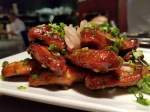
Bangkok Chicken Wings
20170123_174458
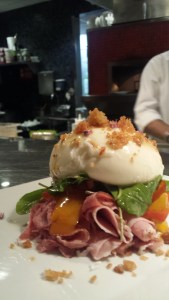
Sliced and served with local Burratina, arugula and Pete’s Pickled Peppers

20160601_204819

Ham Fat Croquettes

2013-02-01_19-51-14_741

The next post will be about Saucisson Sec, a dry cured sausage we made from Hoosier.

Death of a pig (part 6) Belly

A bit of a delay in getting this latest post out, I was visiting Cuba with my dad.  I will do a post about my trip in the near future.  Don’t worry we still have plenty of Hoosier to write about and serve.

Pig belly, oh glorious pig belly, a perfect marriage of meat and fat.  Cooked properly it has an unmatched succulence, melt in your mouth fat with just the right amount of meat.

At EVOO we have cooked pig bellies many different ways, usually braised, then glazed with a myriad of sweet and / or spicy sauces, sometimes fried and often finished on the grill.  Every so often we will cure and smoke the bellies to make bacon, though I get more satisfaction out of the other preparations.

Hoosier’s belly on the grill

20141006_175714

Hoosier’s belly is being prepared this way: Sweet Soy Glazed Grilled Pig Belly with Miso Laced Parsnip Puree, Roasted Radishes and Carrot – Daikon Sprout Salad

20170104_183036

After braising the bellies we trim them to make evenly cut, nice looking, portion sized pieces.  With those trimmings we remove the skin and pulverize the crap out them making a semi-chunky paste, kind of like rillettes, only better.  We serve it at room temperature as a spread with homemade pickles.

Pulverized Braised Pig Belly with Arugula, Pickled Garlic Scapes and Grilled Bread

20151124_190504

One of my favorite preparations: Gochujang Glazed Braised Pig Belly

20150501_193652

The Hams are just about ready, they will be the subject of the next post.