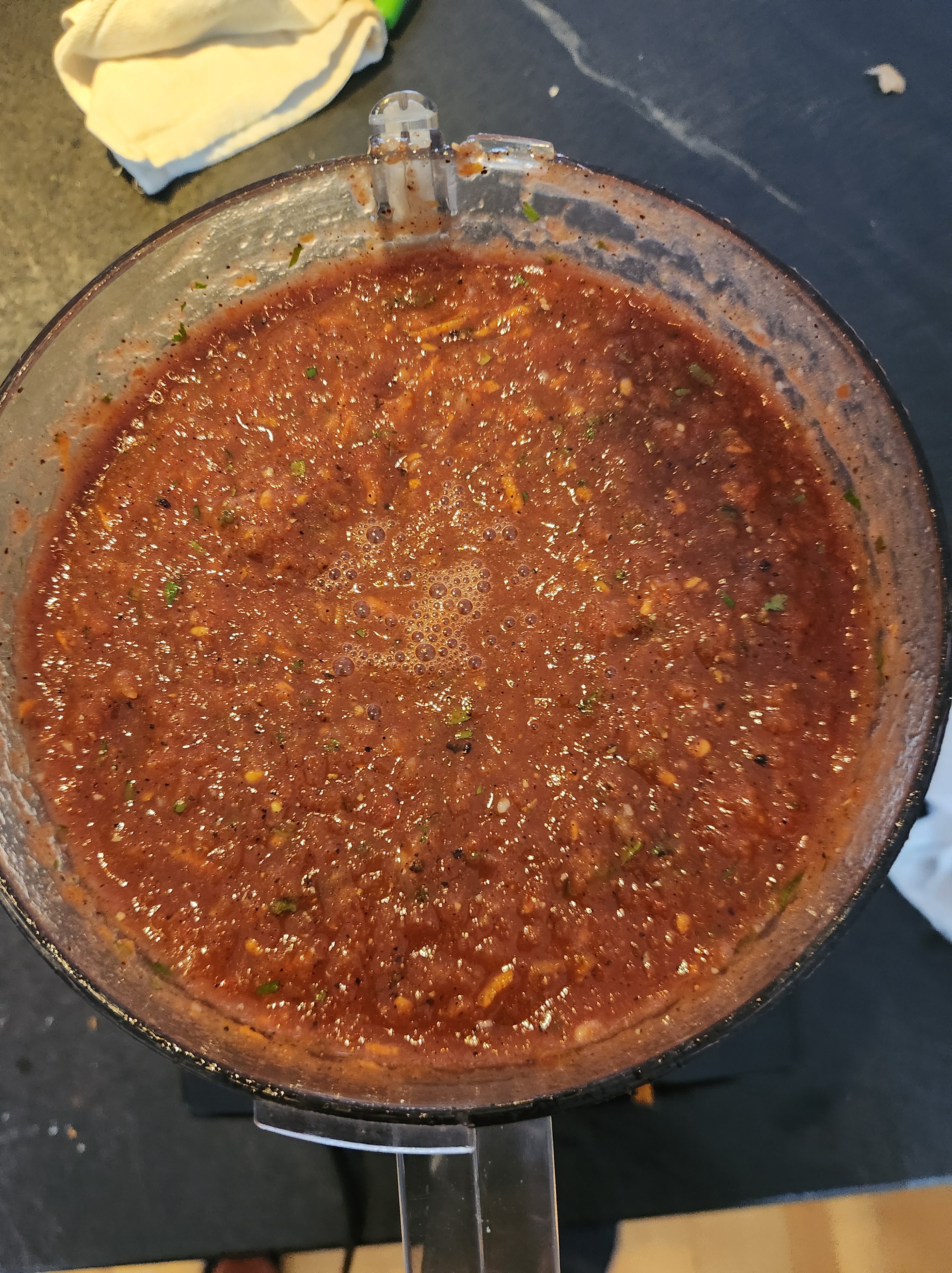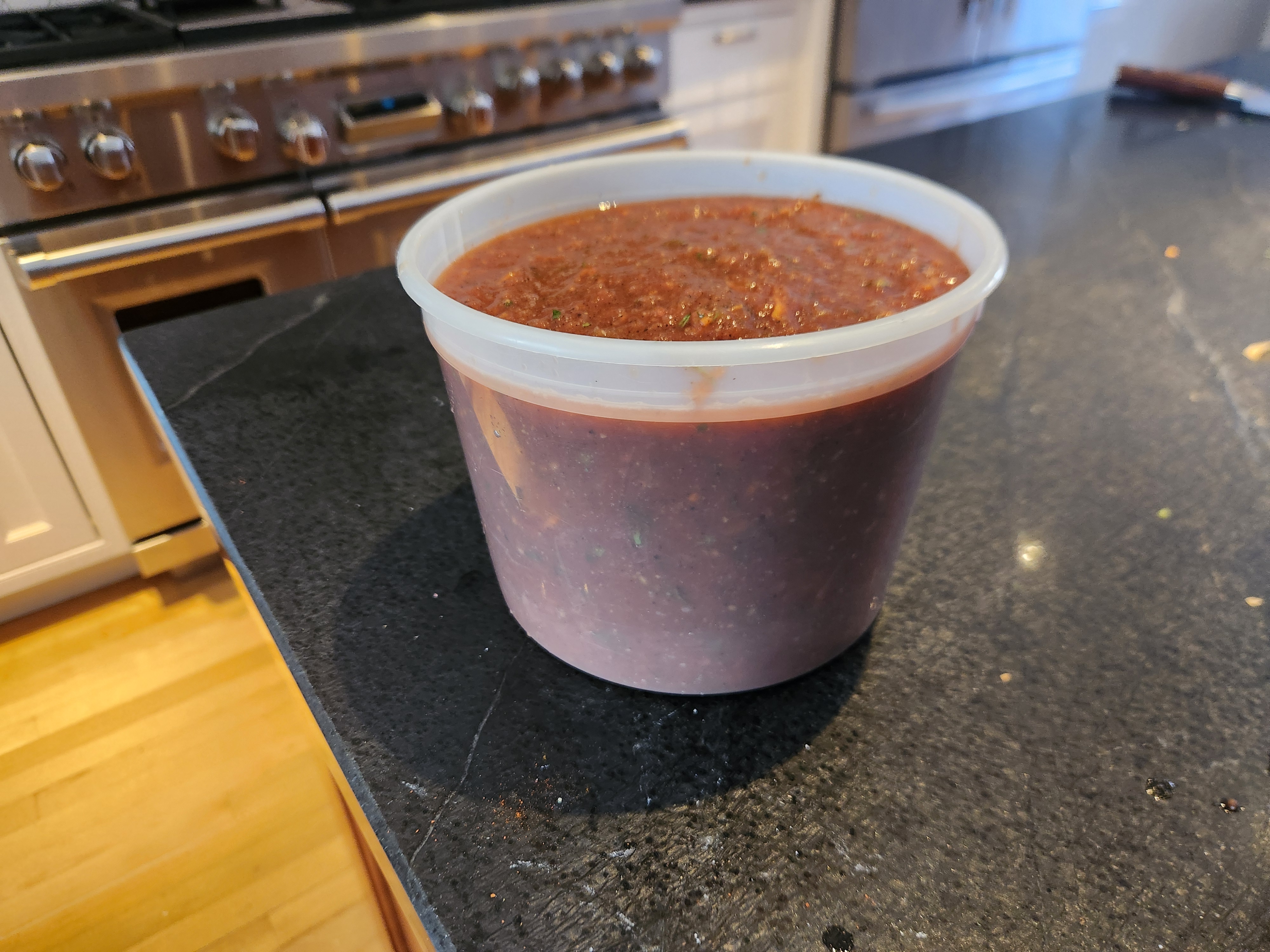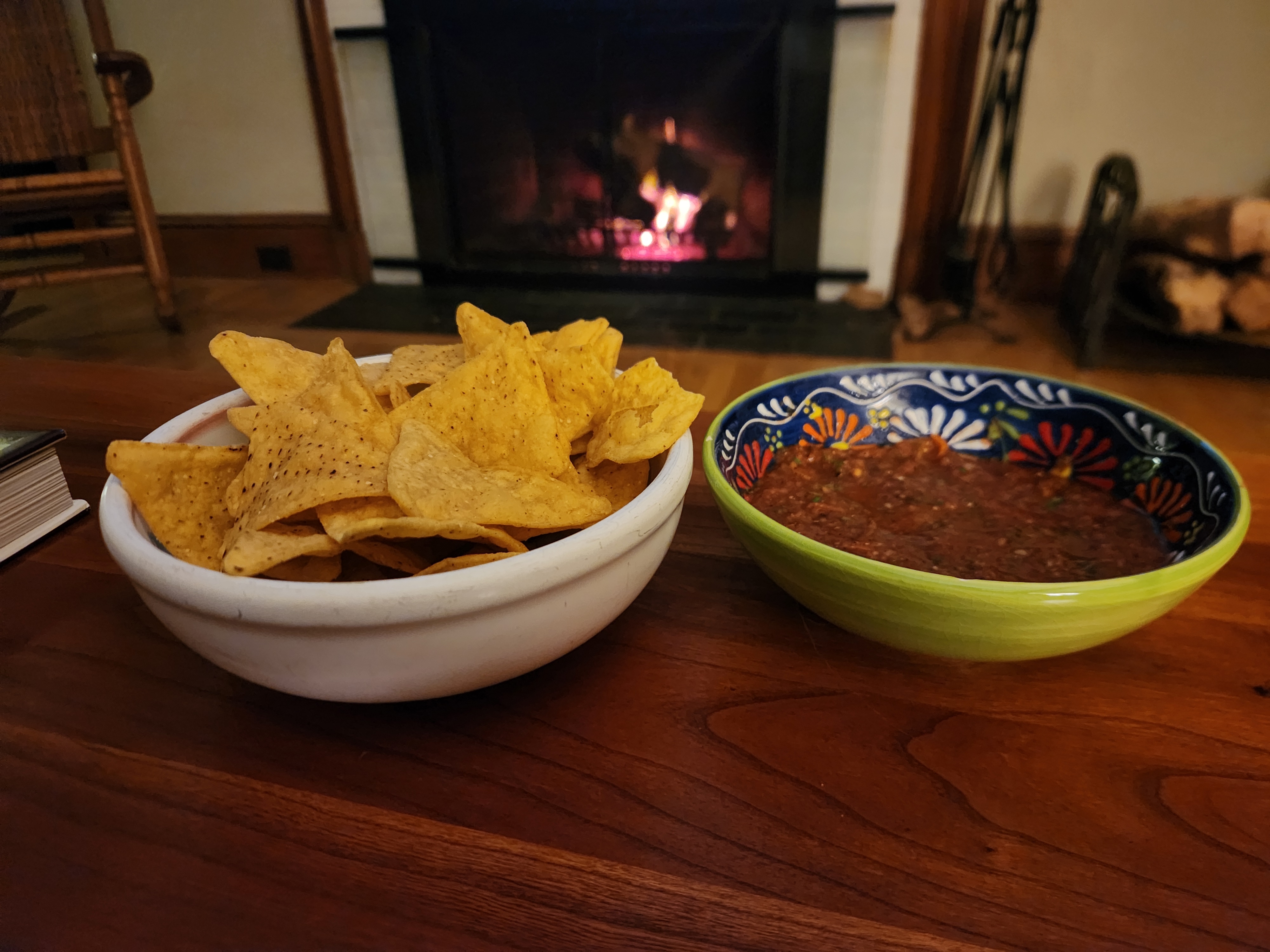
My #1 recipe.

This recipe is not my best, nor my favorite, it’s not even a recipe that I have ever used at any restaurant that I’ve owned or worked in.

It’s my #1 because it’s the one that I have made and still make the most, almost every week, sometimes twice a week. There is never a long period of time in which I go without making this recipe and I eat at least 80% of it myself. My daughter tells me that I am addicted, I am not denying her.

This recipe is based on a recipe that I got from my good friend and brother-in-law Dan. I have adapted it into my own, trying different variations, liking most of them. However, I have settled on the variation I like best.

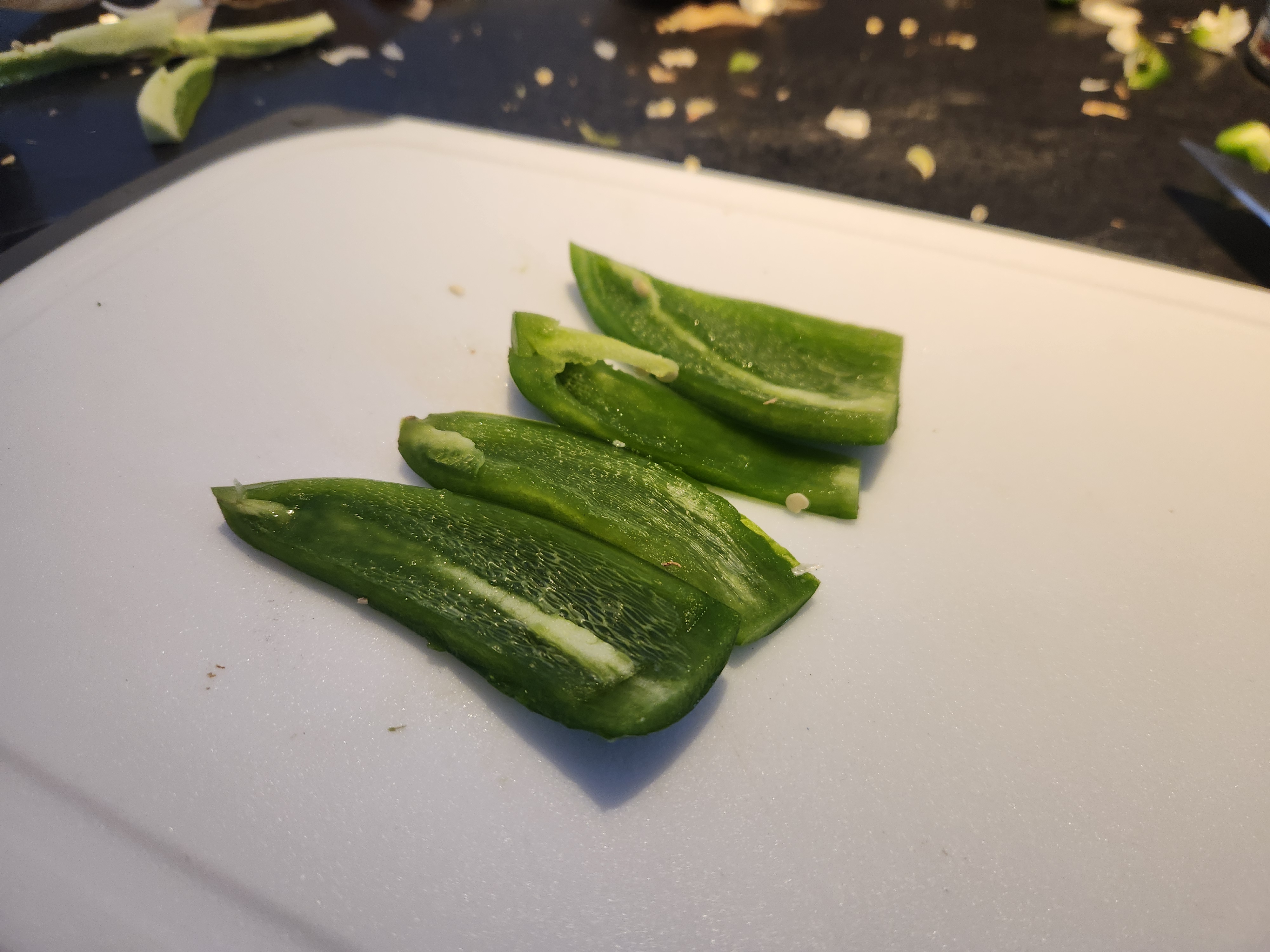
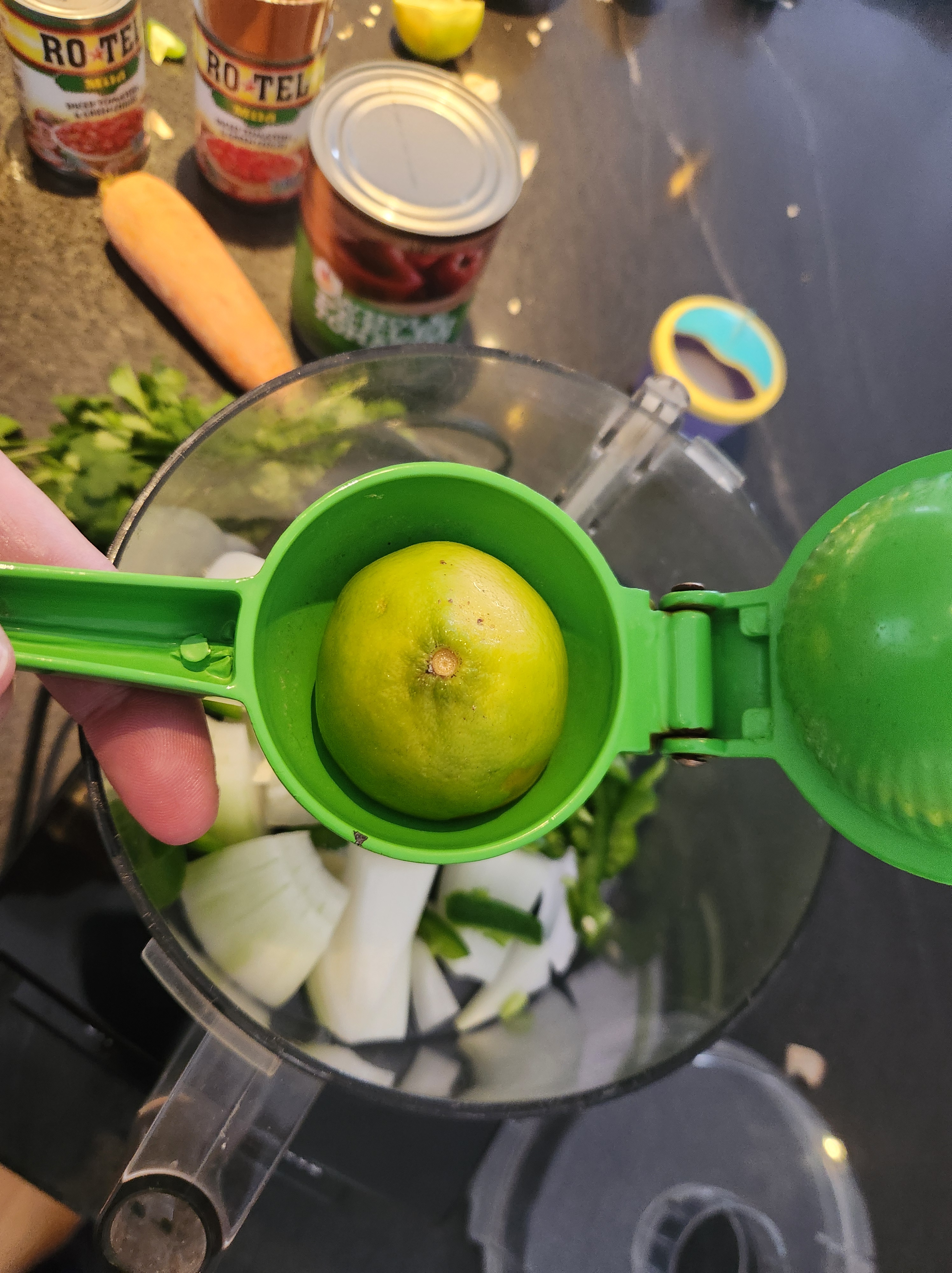
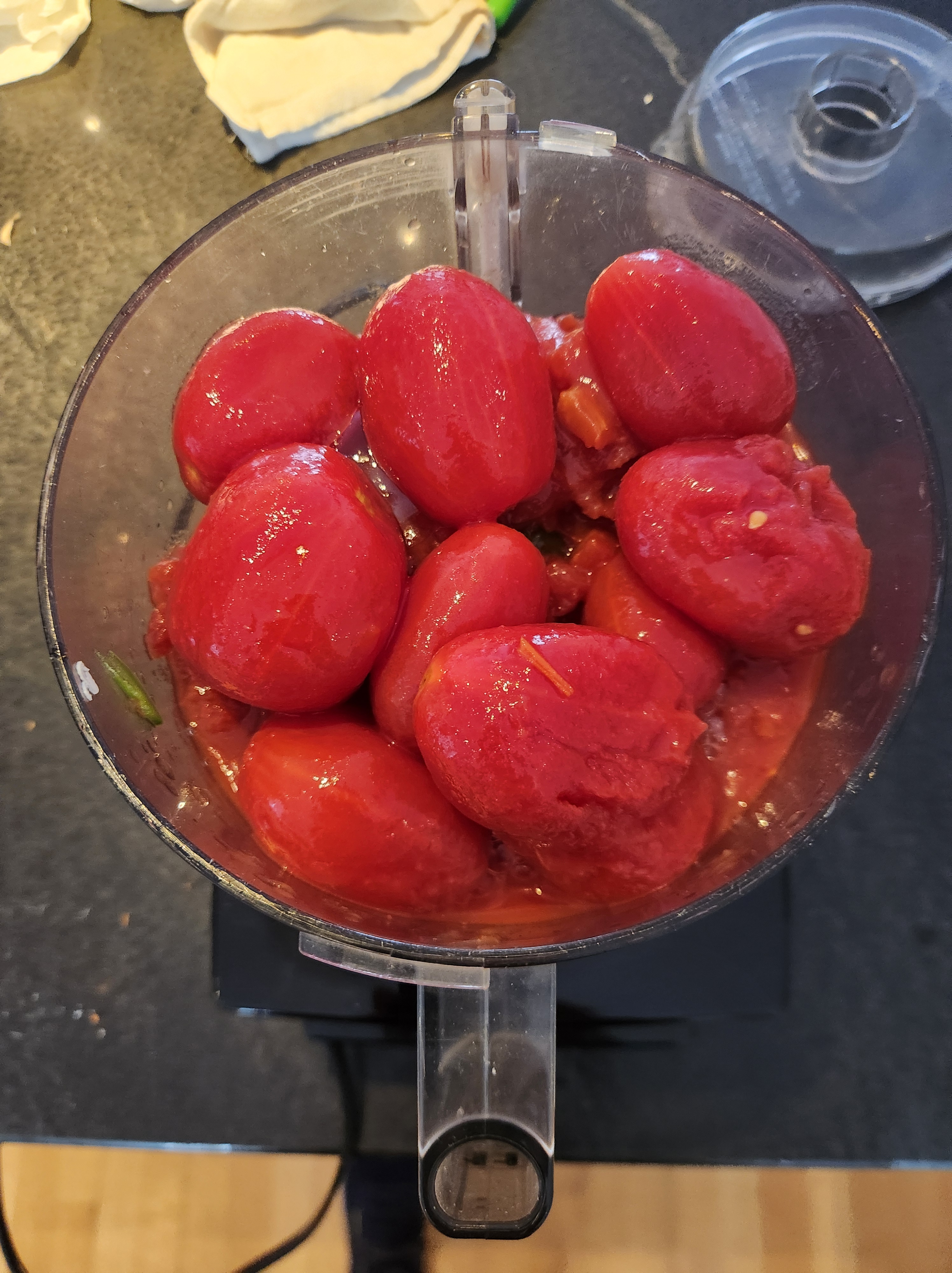
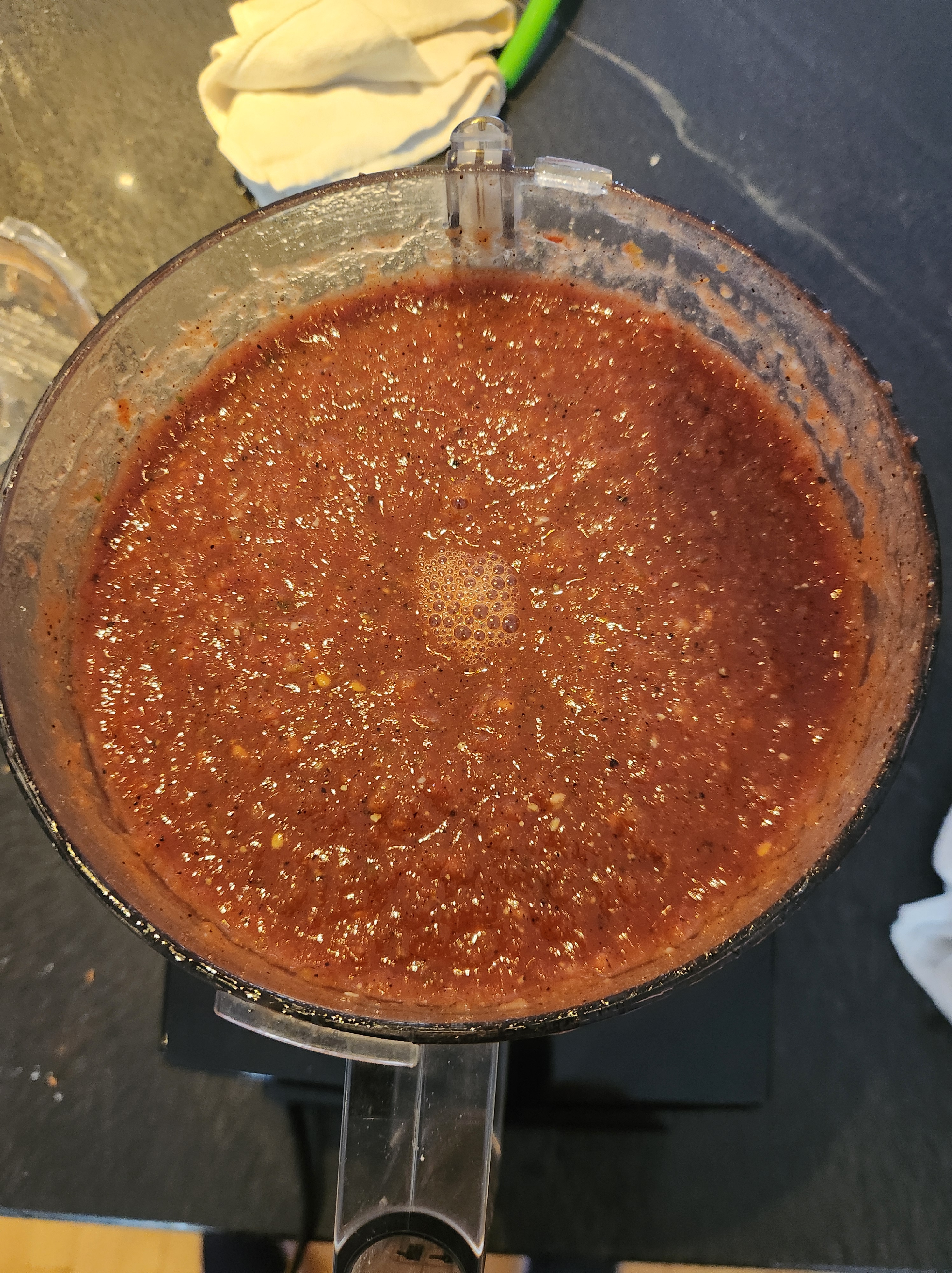
Dan found this recipe online about 25 years ago, it is called “Restaurant Style Salsa”. It is very simple to make, as is my version, really just chop a bunch of ingredients in a food processer for less than a minute and your done.
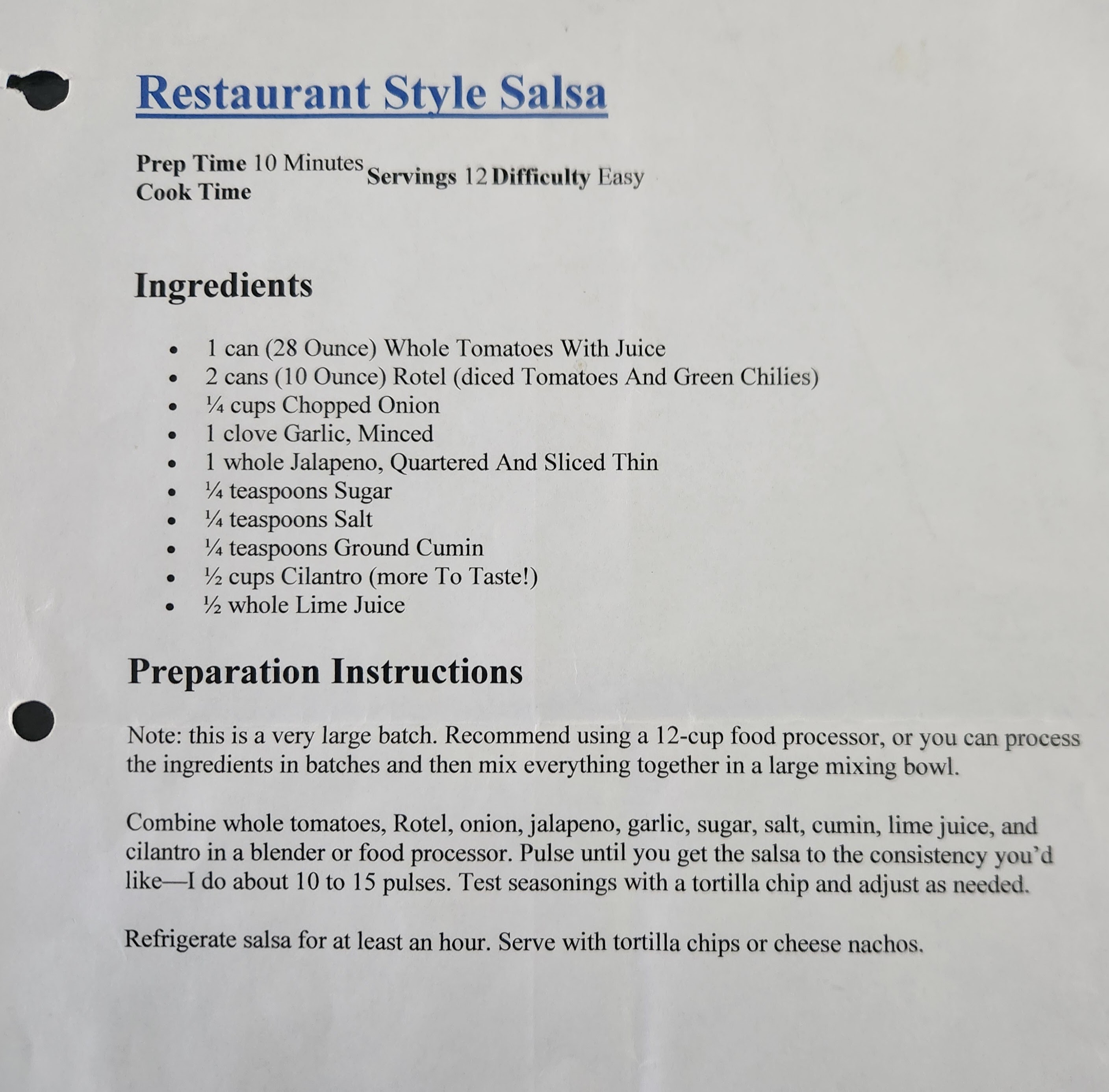
A photo of the “Restaurant Style Salsa” recipe that Dan passed along to me.

I’ve tried substituting canned fire roasted tomatoes for the canned whole peeled tomatoes, which totally changed the salsa, giving it a strong roasted somewhat smoky flavor, which is nice for a change. I’ve even done half fire roasted and half not, also good.

Another time or two I have substituted chipotle pepper (canned in adobo sauce) for the jalapeno; the chipotles added some nice leathery smoke. If used in a batch that also contained the fire roasted tomatoes the chipotles brought the salsa to another level; very good, but still not my favorite variation.

In addition to those substitutions, I have, at times tried adding grilled/roasted peppers, roasted garlic and/or grilled/caramelized onions to this recipe and it’s top-notch. However, the recipe goes from whirling some stuff in a food processor to having to grill, roast and caramelize. Which can be time consuming endeavors. However, if I were to have one or more of these ingredients ready to go in my fridge, I’d add some, though I probably wouldn’t prep them specifically for this salsa recipe.

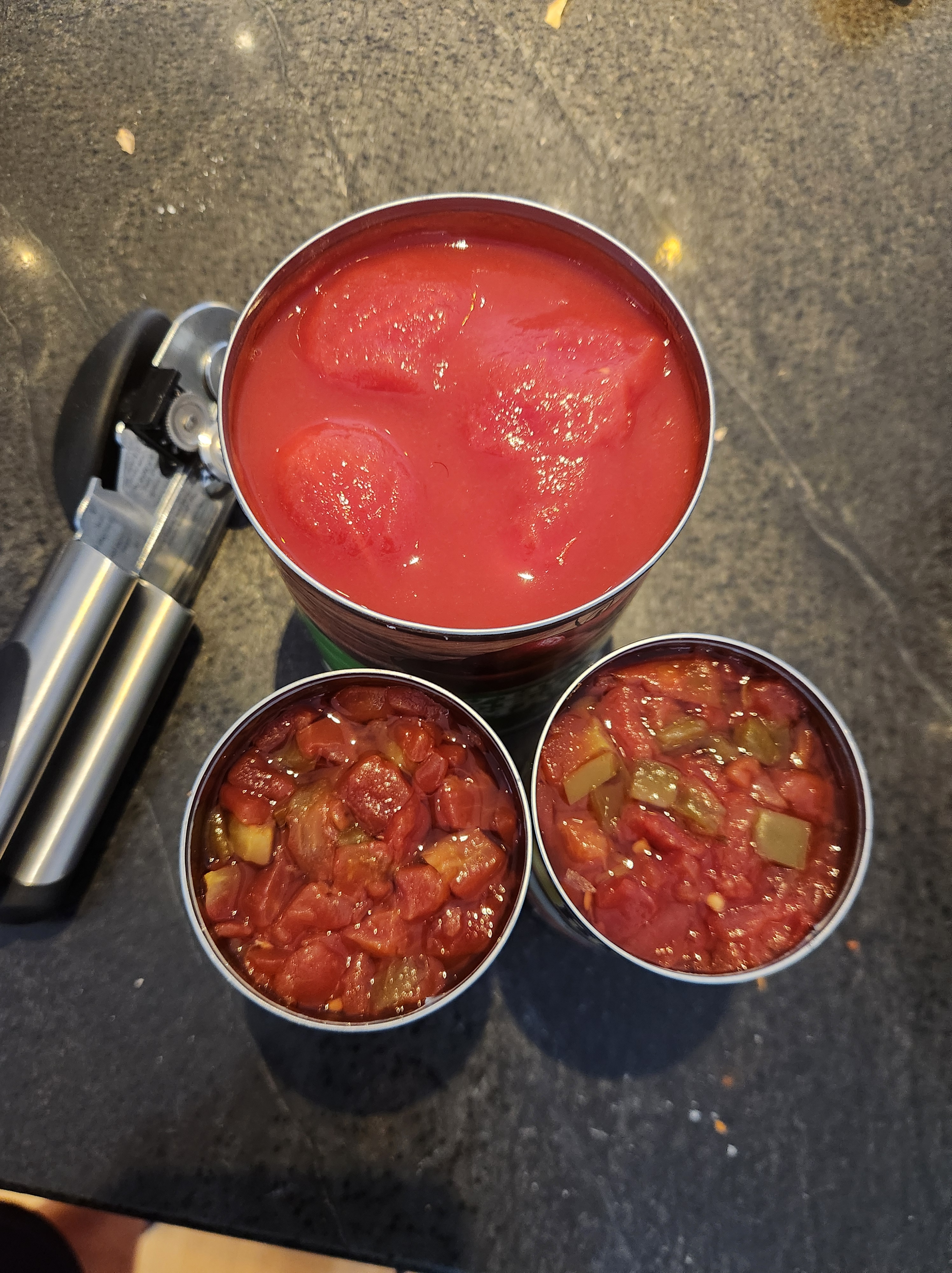
The brand of tomatoes also makes a difference, be sure not to use tomatoes packed with basil or San Marzano tomatoes; some brands are packed with heavy puree, don’t use these either, the results are too tomatoey and too thick. One of my favorite brands, especially because it’s local, is Pastene, I don’t use it for my salsa though, it falls under the too tomatoey and too thick category. I do, however, use Pastene for Italian style tomato sauces. I’ve found that the cheap store brands of whole peeled tomatoes, organic or not, are usually best for this recipe.

For me I want to be able to make, and clean up after making this recipe in less than 10 minutes. This is more than doable, I’ve done it in less than 7, and yes I have timed myself.

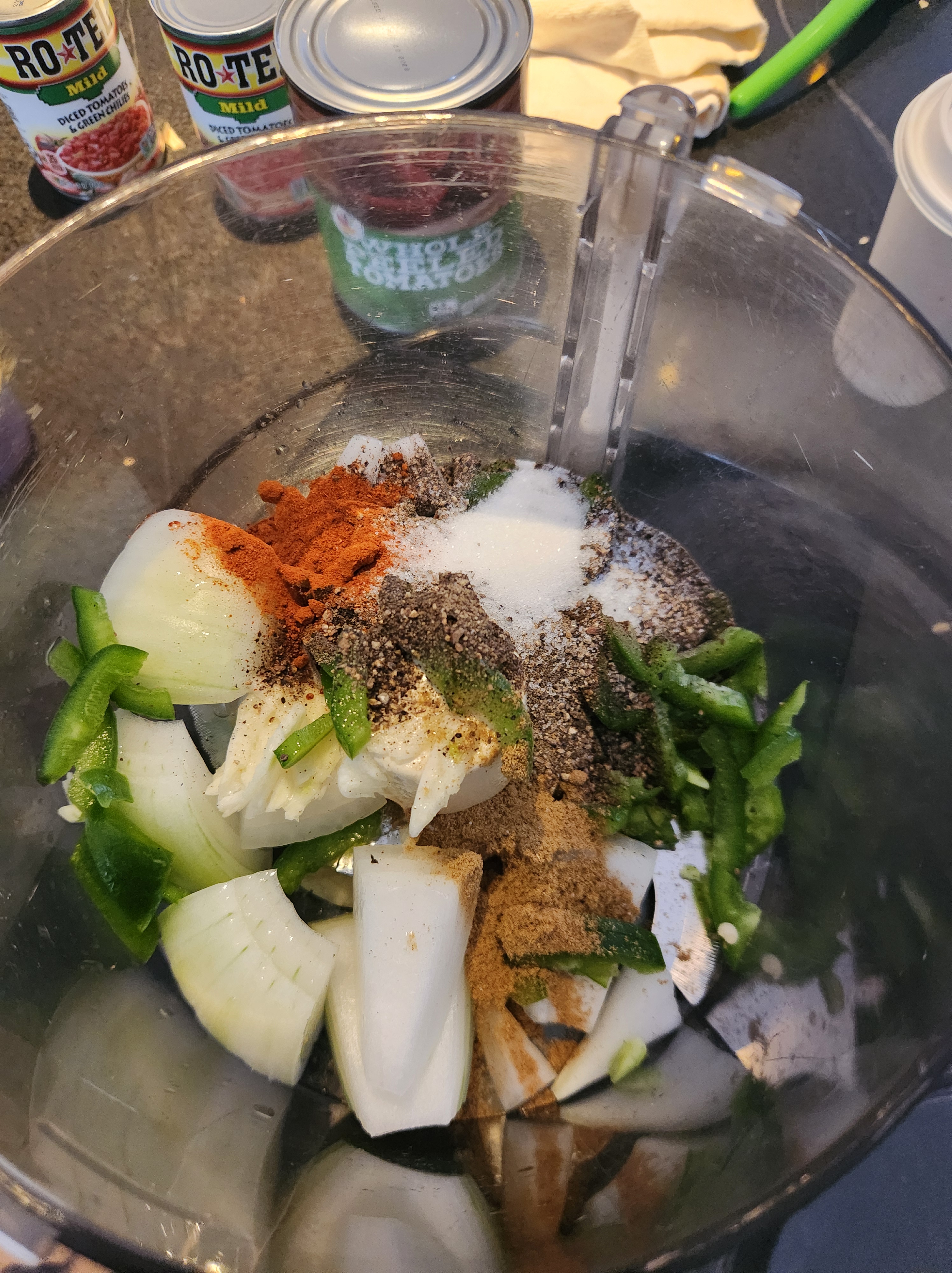
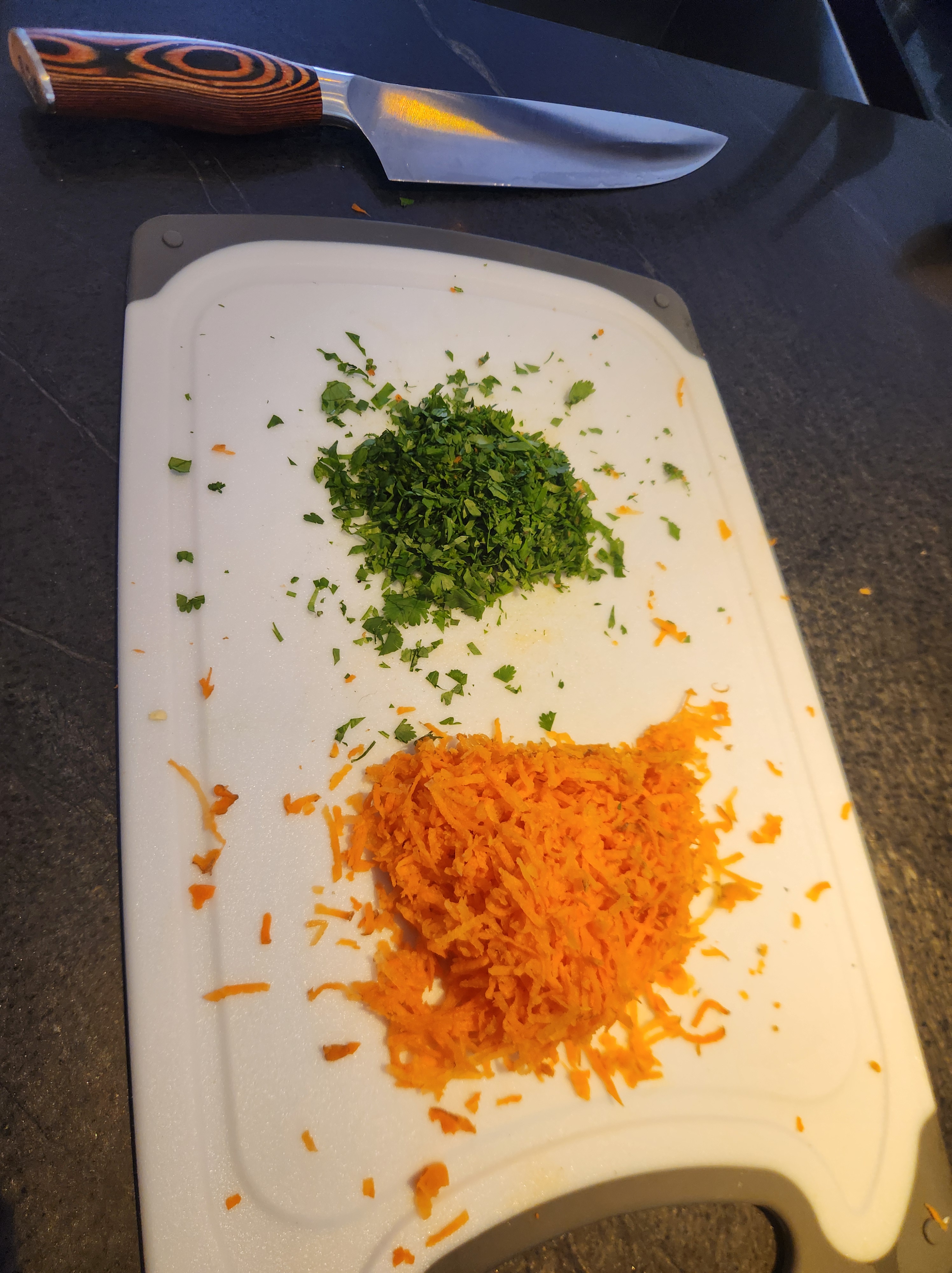
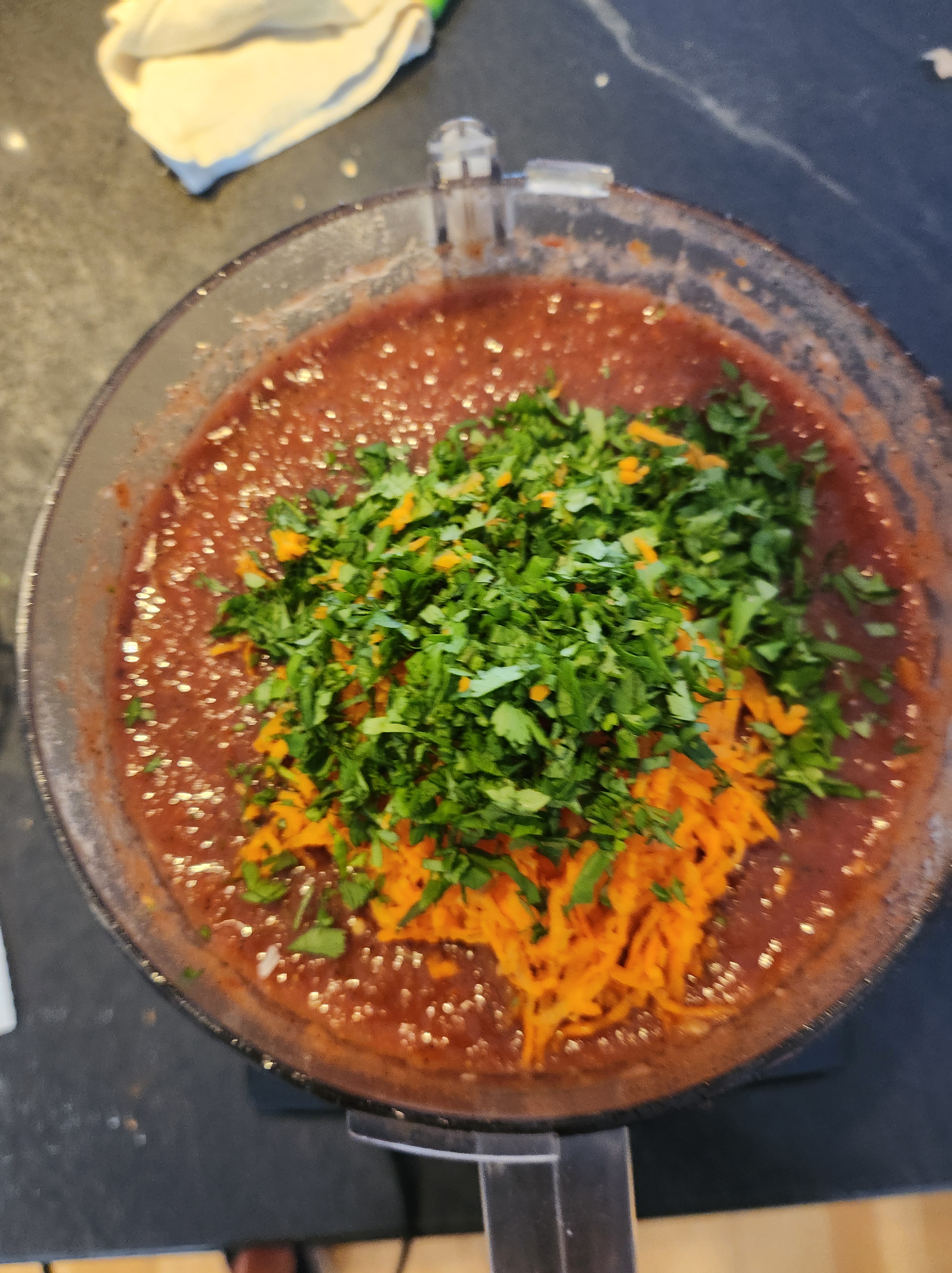
My “go to” version of this recipe is the recipe that Dan gave me all pumped up. I double the amount of onion and garlic called for in the original recipe. I’ve also at least quadrupled the amounts of all of the spices. And I’ve also added a few ingredients to my version including a very generous amount of freshly ground black pepper, some finely grated carrot, which I love in this recipe, it adds color, texture, sweetness and earthy carrot-ness. On top of that I’ve also added smoked paprika, this adds some deep background smokiness without overpowering the other ingredients.
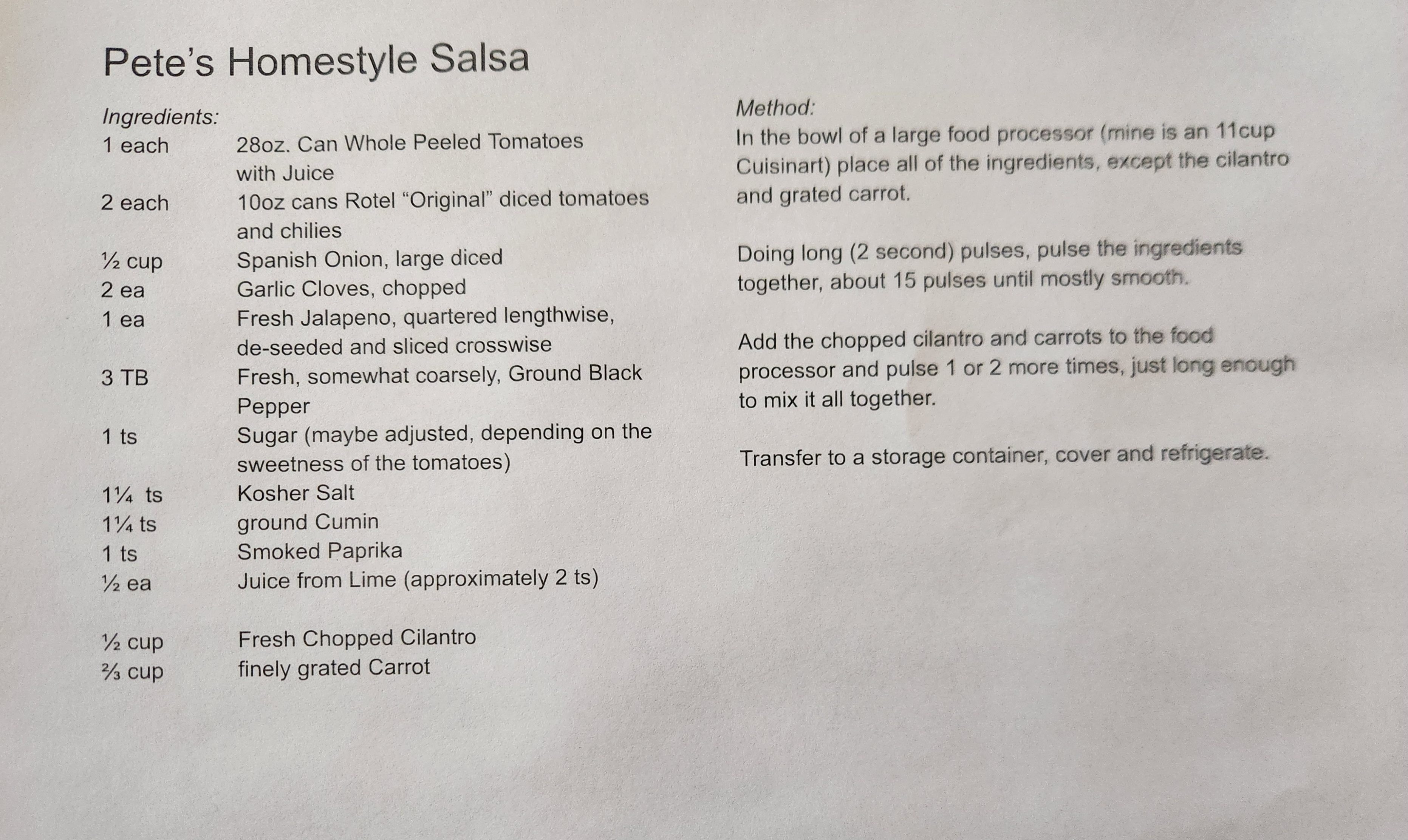
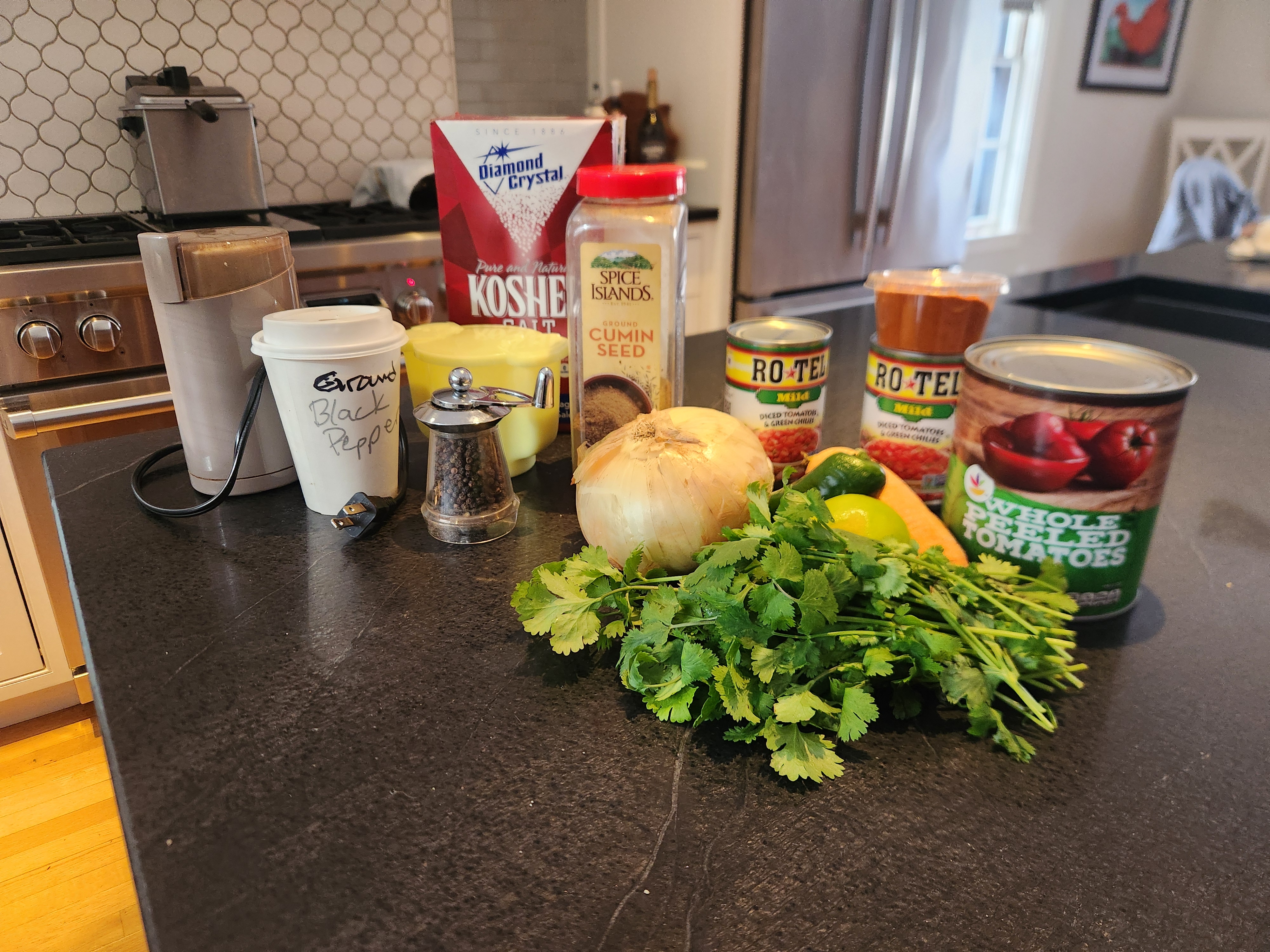
My pumped-up salsa recipe.

Whether you follow Dan’s “Restaurant Style” or my pumped-up version, the end result will be far superior to any store bought national brand salsa. I find most of them to be too sweet, too cooked, too starchy, too mushy, too cloying and lacking in texture as well as depth of flavor. Overall I think they kind of suck.

Don’t limit your taste enjoyment of this salsa to just a dip for corn chips. It also is great baked with flakey white fish such as cod, haddock, hake or pollack. All you have to do is generously slather the fish with the salsa and bake in a 375 degree oven until the fish is cooked through; depending on the thickness of the fish it could be as quick as 5 minutes or as long as 15 minutes.

It’s also great as a sauce for grilled chicken or pork; I have been known to spoon on top of cooked white rice. It’s a delicious, easy to make addition to anyone’s culinary repertoire.
Sous Vide


sous vide
/ˌso͞o ˈvēd/
noun

Sous vide, which means “under vacuum” in French, refers to the process of vacuum-sealing food in a bag, then cooking it to a very precise temperature in a water bath. This technique produces results that are impossible to achieve through any other cooking method. –  Anovaculinary 

20200117_153615

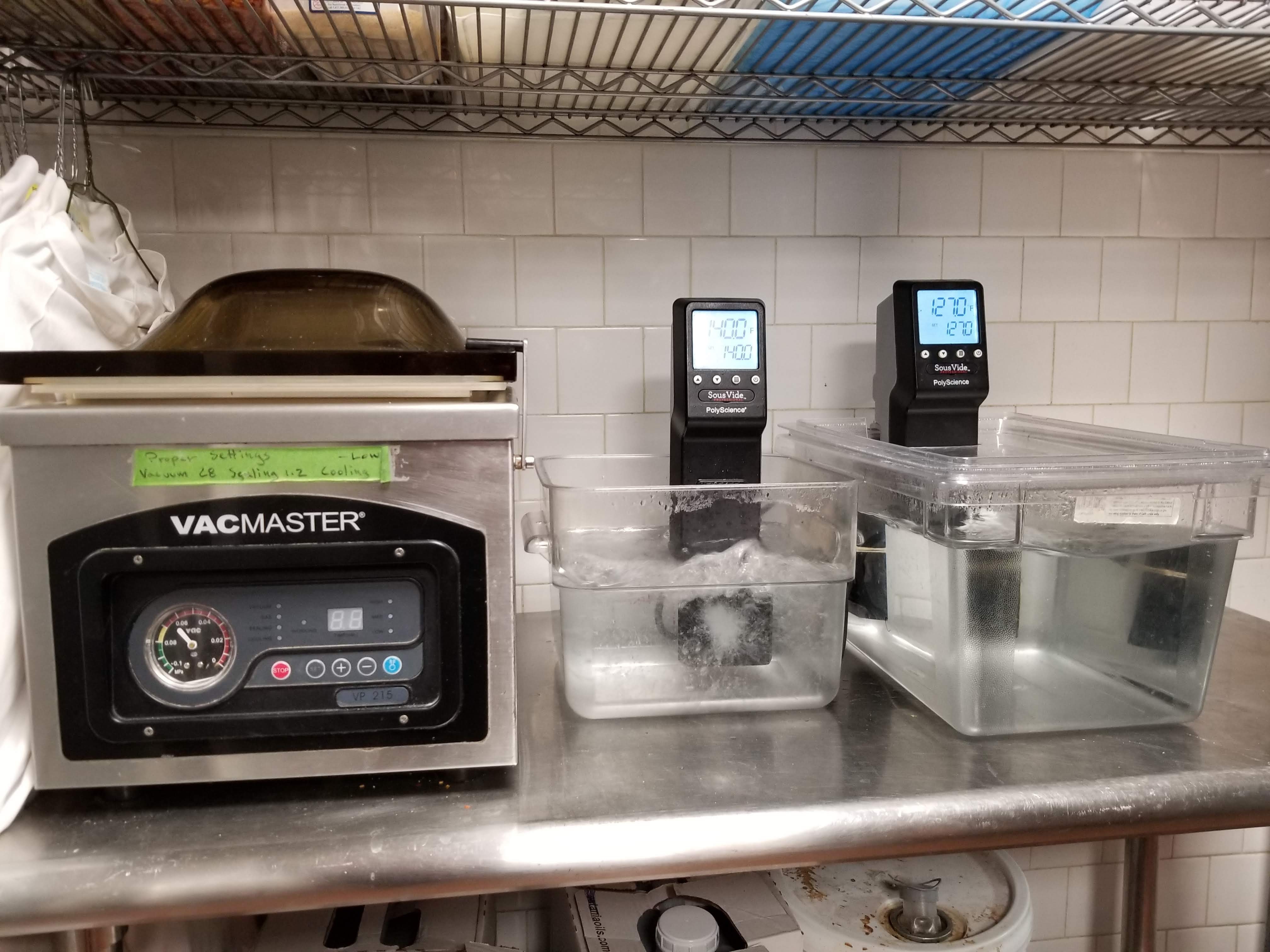
Our sous vide station.

I have been cooking for a long time, starting in the late 1970’s.  First as a prep cook in a neighborhood restaurant, while in high school, making beer money.  I had no passion for food at the time.  I was still feeling my way through life, not sure what I was going to do.  Slowly, and I mean really slowly, I found that I not only was pretty good at cooking, I was actually enjoying it.  Looking back I don’t think it was the food that I was falling for.  Rather, I was an impressionable young man who enjoyed the camaraderie, the manual work and the fact that a free beer was never far from reach.  However, the more I cooked and discovered new foods my passion finally blossomed…I digress.

This post is supposed to be about sous vide, my digression stems from- In those many years of cooking there have been a few techniques or processes that I have learned which have changed the way I cook and think about food. Cooking sous vide is probably the biggest one for me, with whole animal butchery / charcuterie being a close second (see my 10 part “Death of a Pig” blog post).

When I first encountered cooking sous vide I remember thinking- cooking something in a pot of water in a plastic bag…how lame; what skill does that take?  Well, I was quite wrong.

About 14 years ago we started experimenting using a big pot of water, Ziplock Bags and an instant read thermometer on a burner where we would constantly check the temp and adjust the heat.  I quickly realized that this was a great  cooking method.  We could perfectly cook a piece of meat ahead of time, taking the guess work and timing with a lot more possibilities of screwing something up out of the equation.  Once the meat was cooked ahead of time, perfectly, all we had to do is once the customer ordered and it was time to pick-up the meat all you had to do give a quick sear to the meat and serve it.  No more inexperienced cook fucking-up an expensive piece of meat.

Our experiments started with meats using the ziplock method, now we have several immersion circulators and a restaurant size vacuum sealer that are in constant use cooking all sorts of different things; red meats, burgers, chicken, vegetables, eggs, fish and even an occasional pudding for part of a dessert.  Gone are the days of over cooked chicken breast (sorry, Trisha), every chicken breast we serve is moist and tender.

This slideshow requires JavaScript.

My initial trepidation was replaced with “why wouldn’t we cook this way”…a little bit more forethought (prep before service) equals serving a better, more consistent product, it only makes sense.

Sous vide cooking is not just for the professional kitchen,  My Anova immersion circulator and FoodSaver vacuum sealer have been an integral parts of my home kitchen for the past 10 years.

I highly recommend all cooks- pros, wanna-be pros and amateurs to get into sous vide cooking.

The below link is to an informative article in Bon Appetit Magazine.

https://www.bonappetit.com/story/what-is-sous-vide-cooking


Death of a pig (part 10)

The head cheese is all gone.  We served it at our bar, on our homemade charcuterie menu, as is, just a few slices in a board with some of our homemade bread.

20170412_151218

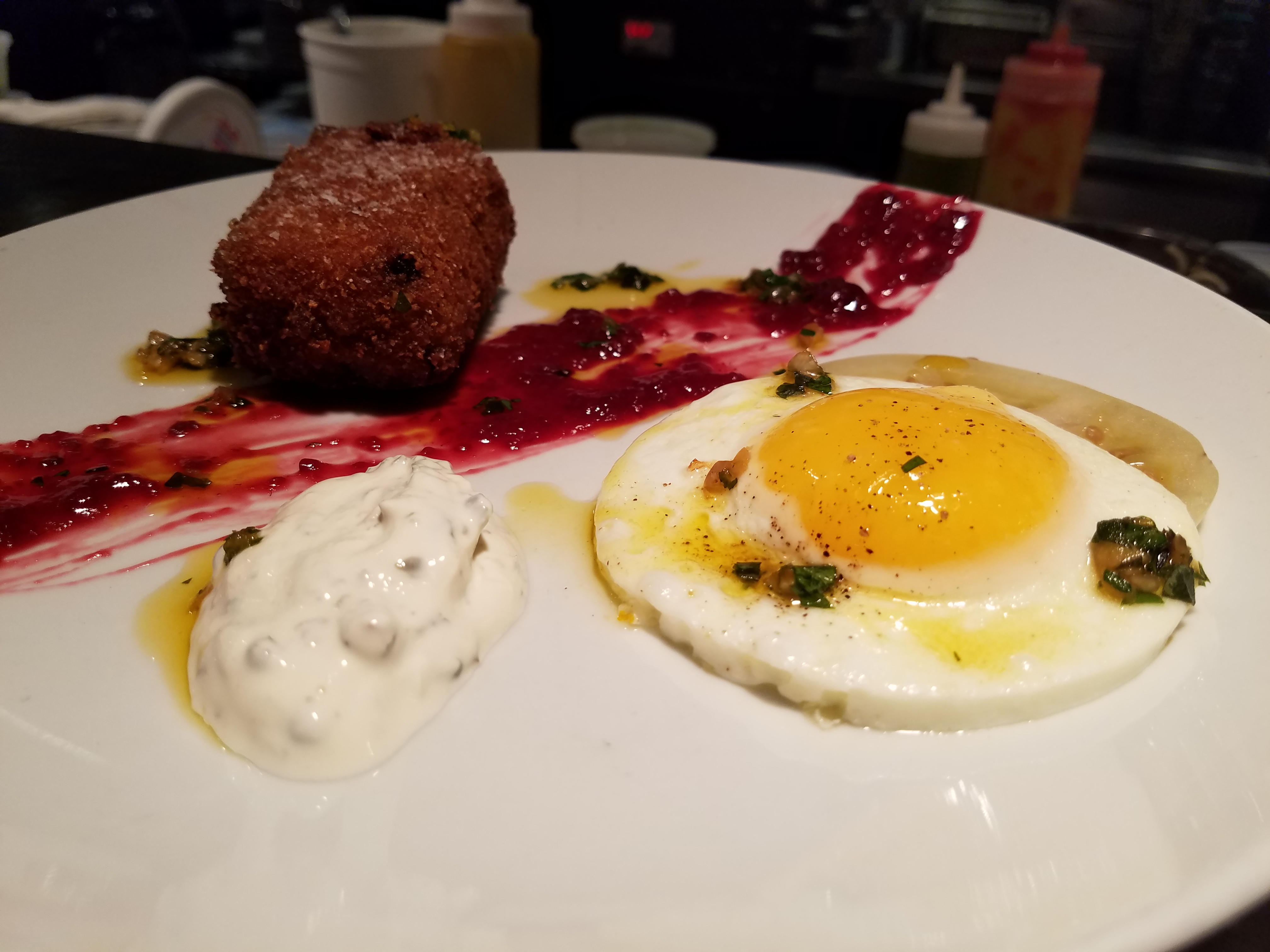
We also cut it into bigger chunks, breaded and deep fried it, serving it with some of last summer’s raspberry jam, pickled green tomatoes and a butter basted egg.

20170413_201349

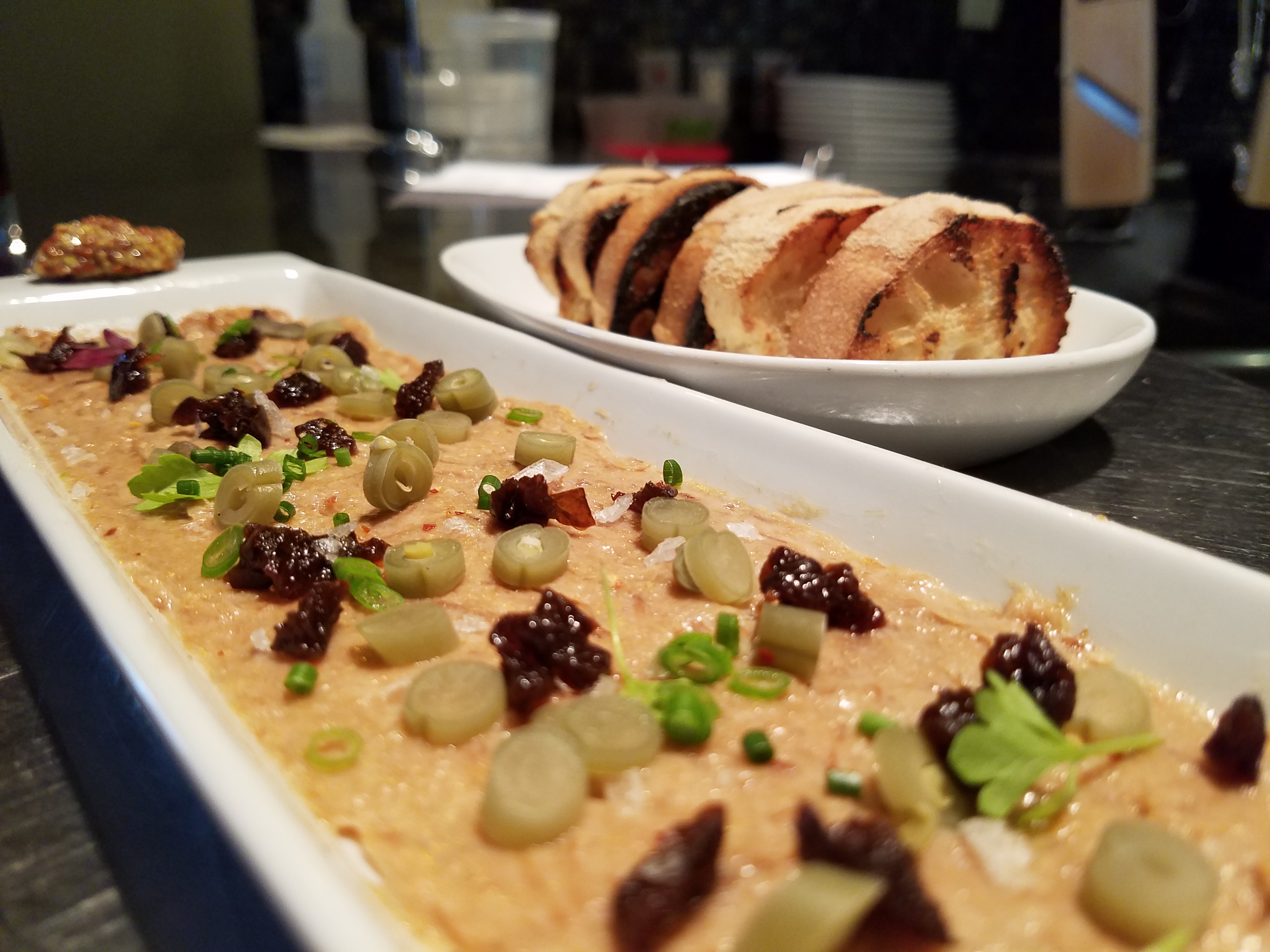
Now that it is gone we have moved on to rillettes.  A traditional french preparation of cooking meat, usually pork, very slowly in fat until the meat is so tender that it shreds apart. Its then chilled enough for the fat to congeal and form a paste.  Typically it’s served at room temperature with grilled or toasted bread.

We are serving the rillettes of Hoosier with pickled green beans, which we pickled last fall, first of the season chives from our rooftop garden, prunes we soaked in lots of booze with some sugar and grilled bread.

20170511_171530

We are scraping the bottom of Hoosier’s barrel; all that remains is some smoked skin and bones, which we will soon use.

Death of a pig, (part 9) Head Cheese

Nearly 4 months after he was delivered to us Hoosier’s hoof-prints are still making big imprints on our menus.  We are using the leaf fat for the biscuits being serving with fried chicken on our lunch menu.  His jowls, that we cured to make guanciale are being served with a locally produced Buratta cheese.

20170130_221918

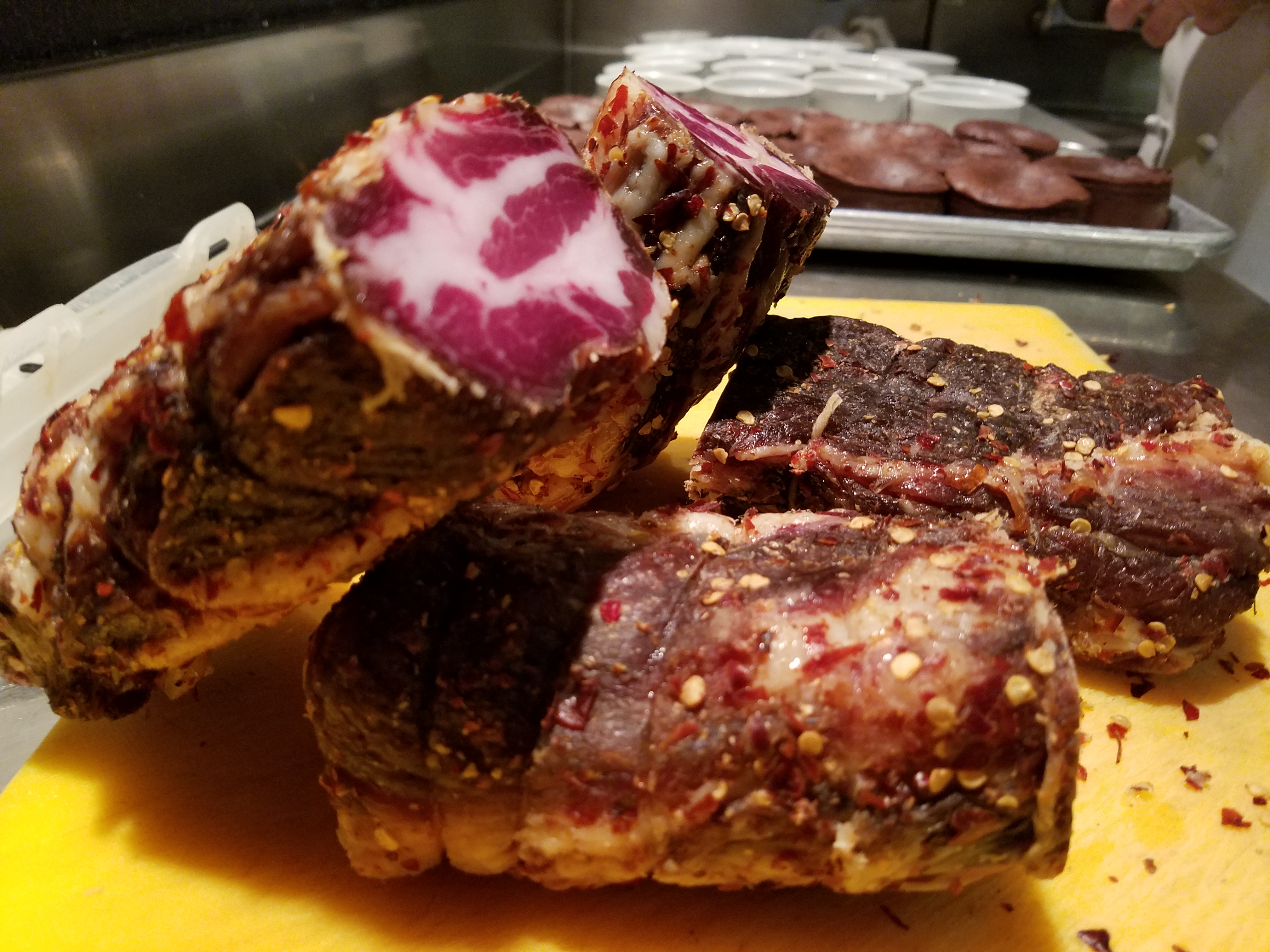
Peppered Coppa

On our Charcuterie Chalkboard we are still featuring spiced coppa,  his back fat is in our kielbasa and chicken sausage, and the fat from the hams we smoked are being used to make ham fat – potato croquettes.  The remaining freezer fodder includes some smoked skin and bones, a fair amount of back fat and a few pounds of meat that will end up as sausage, rillettes or even braised.


Beyond all that, I just made a non-traditional head cheese, inspired by the head cheese I had at  Cochon a great restaurant in New Orleans.  A few winters back Colleen and I happened by, walking for miles, as we do every time we visit an unfamiliar city.  I had heard of Cochon and since it was about time for a refreshment break, mid-afternoon, we sat outside in the hot February sun, we ordered up some drinks and one of their house-made charcuterie platters.  All of the charcuterie was good, but the head cheese was memorable. It changed the way I have approached making it ever since.

head cheese

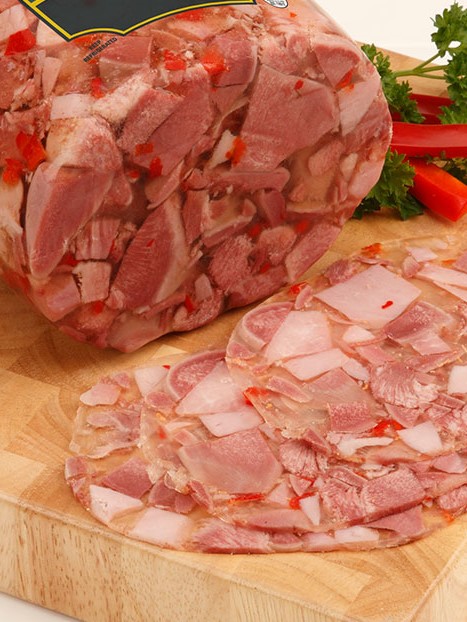
Typical Supermarket Head Cheese

Typically it’s the bits of the head; the tongue, ears, cheeks, skin and fat separated by overly gelatinous substance, resulting in a barely palatable concoction. It’s like eating a salty version of that Jello-canned fruit crap my mother would make for us back in the seventies.


At Cochon it appeared as though they pureed together some of the head fat with some reduced braising liquid from cooking the head and then folded in the other bits before pouring in all into a terrine to be chilled.


I made it like that a few times with great results, it really is so much better than the traditional version.

20170412_151218

EVOO’s Head Cheese

I decided to take it one step further and smoke the head before braising it, wow, head cheese went from barely palatable to really good to I want some now!  The smoked version is by far the best; sweet, smoky, salty and super rich.  We currently have it on our charcuterie chalkboard, as is, sliced on a board.  On EVOO’s dinner menu we have made a croquette out of it, breading and deep frying a thick slice, serving it with last summer’s raspberry jam, pickled green tomatoes, scallion – green peppercorn sour cream and a butter basted egg.


20170413_201353

Head Cheese Croquette

We’ll see if Hoosier offers up any other delicacies worthy of another post. He has had an amazing run on our menu, we greatly appreciate all that he has given us.